
Top Plant-Based Solutions companies - 2024
Crop Protection - 2024

\\\\\\\\\ Top Plant-Based Solutions companies \\\\\\\\\

  • Ahavah Farm

    Ahavah Farm is a self-sustaining, family-owned, and community-run sustainable and regenerative farm following biodynamic principles. It uses the least invasive and most environmentally-friendly farming practices that restore and rejuvenate the farmland and its surroundings while ensuring top quality yields.

    -See Ahavah Farm Profile

    Our mission is to provide health to our region, healing to our earth, and love to our community by growing the purest and most environmentally-responsible food possible

    Yosef Camire, Owner

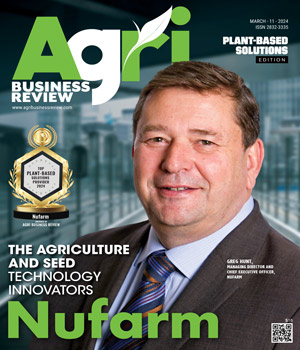
  • Nufarm

    Nufarm is a global crop protection and seed technology company established over 100 years ago. It is listed on the Australian Securities Exchange (ASX:NUF) with its head office in Melbourne, Australia. As an agricultural innovator, Nufarm is focused on innovative crop protection and seed technology solutions. It is the first company to develop and commercialize plant-based Omega-3 and has developed and commercialized advanced bioenergy feedstock technology.Nufarm’s seed technologies platform, Nuseed, was established in 2006. It has 10 locations (including three proprietary innovation centers)in Australia, Europe, North America, and South America, and sales in more than 30 countries.

    -See Nufarm Profile

    Our Omega-3 Canola, initially cultivated in the U.S., offers a sustainable source of the essential nutrient. This development, represented by Nutriterra® and Aquaterra®, not only addresses human nutrition needs but contributes to environmental sustainability

    Greg Hunt, Managing Director and Chief Executive Officer, Nufarm and BRENT ZACHARIAS, Group Executive, Nuseed

  • Perfect Flight

    Perfect Flight, a pioneering software company, emerged as a beacon of innovation within the realm of agricultural technology. Distinguished by its online software platform, Perfect Flight offers a range of versatile and customizable solutions, including advanced monitoring and optimization technology and planning tools focused specifically on aerial applications.

    -See Perfect Flight Profile

    Owning top-notch products, such as advanced nozzles and equipment for applying chemicals, is not enough. The improper application of chemicals in the field can lead to environmental damage and negative impacts, which is where we step in mitigating these issues

    Vinícius Velho, Business Development Representative

Crop Protection FAQ

Q1
What Do Top Crop Protection Companies Do?
Top Crop Protection Companies develop and supply products and technologies that help farmers manage weeds, insects, diseases and other threats that reduce crop yields. Their offerings can include herbicides, fungicides, insecticides, biological products, seed treatments and digital farming tools. The category extends beyond selling crop inputs. Many providers also support application planning, resistance management and agronomic decision-making. In modern agriculture, crop protection is closely tied to productivity, food quality and farm profitability. A pest outbreak at the wrong stage of growth can significantly affect harvest outcomes.
Q2
Why Do Top Crop Protection Companies Matter More Today?
Growing food demand, changing weather patterns and increasing pest pressure have made crop protection a more complex challenge. Farmers are being asked to produce more while meeting stricter sustainability and regulatory expectations. Top Crop Protection Companies are responding by investing in biological products, precision application technologies and new active ingredients designed to improve effectiveness while reducing unnecessary chemical use. Industry investment in biological and nature-inspired crop protection is also increasing as growers look for additional tools beyond conventional chemistry.
Q3
How Should Agribusinesses Evaluate Crop Protection Providers?
Price remains important, but it should not be the only comparison point. Agribusinesses should examine product performance across different crops, resistance management strategies, technical support and local field expertise. A useful test is to review how a provider handles a real pest-management challenge in a region similar to the buyer's operation. Documentation, stewardship programs and application guidance often reveal more about a provider's long-term value than a product brochure. Small mistakes in crop protection programs can lead to yield loss, reapplication costs and unnecessary field disruptions.
Q4
What Value Do Top Crop Protection Companies Deliver to Growers?
The value extends well beyond pest control. Effective crop protection helps preserve yield potential, improve crop quality and protect investments already made in seed, fertilizer and irrigation. Leading crop protection companies also help growers manage risk through integrated programs that combine multiple treatment approaches. When products are selected and applied correctly, farmers can reduce crop losses and maintain more predictable production outcomes. The practical benefit is simple: healthier crops generally create more reliable revenue opportunities at harvest.
Q5
How Are Innovation and Technology Changing the Crop Protection Market?
Technology is reshaping how crop protection products are discovered, developed and applied. Artificial intelligence, microbial research, genetic science and precision agriculture tools are helping providers identify new solutions and target treatments more accurately. Interest in biological crop protection products continues to grow as growers seek additional options for resistance management and sustainability goals. Precision application systems are also reducing unnecessary pesticide use by directing treatments where they are needed most. These developments are changing how crop protection companies compete and how farmers evaluate new products.
Q6
What Should Decision-Makers Prioritize When Comparing Top Crop Protection Companies?
Decision-makers should focus on three areas: product effectiveness, technical support and long-term reliability. The strongest providers typically offer proven performance data, responsive agronomic expertise and a pipeline capable of adapting to changing pest pressures. Buyers should also consider how well a company supports stewardship, regulatory compliance and resistance management. Top Crop Protection Companies are increasingly judged not only by what they sell today but by their ability to help growers address future challenges. Agriculture changes quickly, and crop protection strategies must evolve with it.